Venezuelans in Florida See Hope in Returning Home as Political Climate Shifts
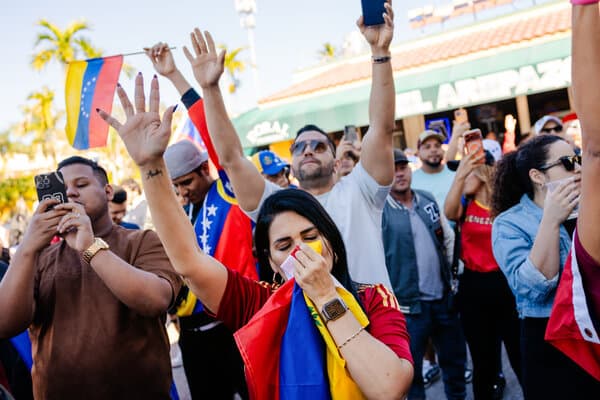
For years, many Venezuelan immigrants living in Florida believed returning to their homeland was an impossible dream. The political turmoil, economic collapse, and social unrest that drove them from Venezuela made the prospect of a safe return seem remote. However, recent developments have begun to shift this perception, offering a glimmer of hope that home may not be out of reach forever. The exodus from Venezuela has been one of the largest displacement crises in the Western Hemisphere. Over the past decade, millions have fled widespread shortages of food and medicine, hyperinflation, and an increasingly authoritarian government under President Nicolás Maduro. Florida, particularly areas like Doral and Weston, became a hub for this diaspora, with communities establishing roots while maintaining a deep connection to the country they left behind. Now, subtle changes in Venezuela's internal landscape and international relations are prompting some expatriates to reconsider. While the Maduro regime remains firmly in power, some opposition movements and civil society groups report small but significant openings. The economic situation, though still dire, has seen localized stabilization in certain sectors, and some who fled are cautiously exploring whether conditions might support a return. Community leaders in South Florida note that the conversation has shifted. Where once talk was exclusively about survival in exile and how to bring family members out, there is now increasing discussion about potential scenarios for return. This is not a mass movement yet, but a carefully measured consideration by individuals and families weighing risks against the pull of home. International pressure has played a role. Sanctions and diplomatic isolation have weakened the Venezuelan government's position, though not to the point of collapse. For some expatriates, this represents leverage. They see an opportunity to engage in reconstruction, to be part of a rebuilding process, rather than simply waiting in limbo abroad. The emotional component cannot be overstated. Leaving one's homeland is often a desperate act, not a chosen path. Many Venezuelans in Florida maintain dual lives—working and raising families in the U.S. while their hearts remain tethered to Venezuelan neighborhoods, landscapes, and traditions. The idea of returning is not just political; it is deeply personal. There are significant hurdles, however. Safety remains a primary concern. Reports of violence, arbitrary detentions, and ongoing human rights abuses continue. The infrastructure for basic needs like electricity and water is unreliable. And for those who have been vocal critics of the government from abroad, the threat of persecution upon return is very real. Economically, the challenge is immense. Most returnees would be starting over, with property and assets often lost or seized. The currency is unstable, and the job market is extremely limited. Yet some entrepreneurs see opportunity in the vast untapped potential of a country rich in resources but mismanaged for years. The U.S. government's stance on Temporary Protected Status (TPS) for Venezuelans also influences decisions. TPS provides temporary legal status and work authorization, but it is not a pathway to permanent residency or citizenship. The uncertainty around its renewal affects long-term planning. For some, maintaining TPS while exploring a return is a strategy to keep options open. Family dynamics add another layer. Many who left have elderly parents or relatives still in Venezuela. The ability to visit safely, or to care for them in their later years, is a powerful motivator. Conversely, the responsibility to provide for children born in the U.S. or to secure their future weighs against a risky move. In Venezuelan communities across Florida, churches, social clubs, and mutual aid societies serve as informal think tanks where these dilemmas are debated. Older generations tend to be more skeptical, having witnessed decades of broken promises. Younger Venezuelans, especially those who grew up in the U.S. but feel connected through family and culture, are sometimes more open to the idea of at least trying to help rebuild. Some non-governmental organizations are beginning to lay groundwork for potential return programs, focusing on areas like education, healthcare, and infrastructure. They emphasize the need for a structured, safe process rather than a rushed, chaotic repatriation. The goal is to ensure that those who return can contribute meaningfully without endangering themselves. Ultimately, the decision to return is deeply individual. It is a calculation of risk, love, and hope. For many in Florida, the dream of Venezuela's recovery is what sustains them. Seeing any sign that this dream might one day be reality—however faint—is enough to make the impossible seem within reach. The road home is long and uncertain, but for the first time in years, it appears to exist at all.