Trump Withdraws from Global Climate Accord
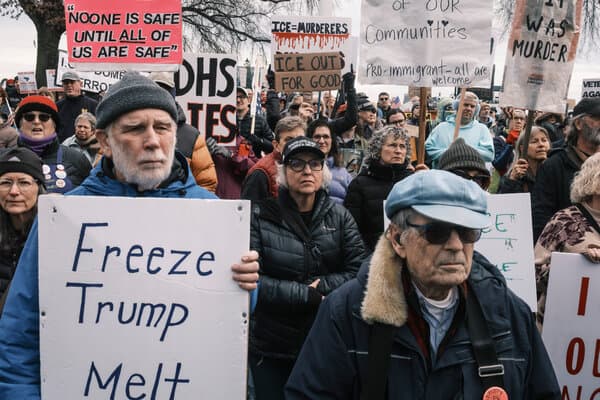
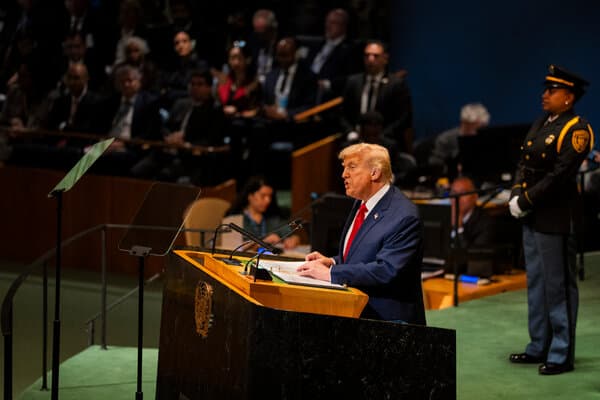
In a landmark decision that has sent shockwaves through the international diplomatic community, former President Donald J. Trump has officially announced the United States' withdrawal from the Paris Agreement, the landmark global treaty designed to combat climate change. The move, detailed in a formal notification to the United Nations, fulfills a central campaign promise and marks a significant shift in U.S. environmental policy with far-reaching implications for the global effort to curb greenhouse gas emissions. The announcement, made from the White House Rose Garden, framed the accord as a raw deal for the American economy. 'We are getting out,' Trump declared, characterizing the agreement as punitive to the United States while granting favorable terms to other major economies like China and India. The President argued that the deal would cost millions of jobs and billions of dollars in economic output, citing potential losses in the coal, oil, and natural gas sectors. This economic rationale formed the cornerstone of his argument, appealing to his political base and supporters in the fossil fuel industry who had long lobbied against the treaty. However, the decision to pull out of the climate treaty is not merely a domestic economic matter; it represents a profound rebuke of the global consensus on environmental stewardship. The Paris Agreement, adopted by 196 parties in 2015, was hailed as a historic breakthrough. It set a universal goal to keep the increase in global average temperature to well below 2°C above pre-industrial levels, while pursuing efforts to limit the rise to 1.5°C. Every nation had pledged voluntary cuts in emissions, acknowledging that climate change is a shared threat requiring a coordinated response. By withdrawing, the U.S. joins a very short list of nations outside the accord, positioning itself as the sole major industrial power to reject the framework. The legal and procedural aspects of the withdrawal are complex and extend the timeline significantly. Under the terms of the accord, a party may not give notice of withdrawal until three years after the agreement enters into force for that party. The agreement entered into force for the United States on November 4, 2016. Therefore, the earliest effective date of withdrawal is November 4, 2019. Following that, there is a mandatory one-year waiting period, meaning the United States would officially leave the agreement on November 4, 2020—just one day after the next presidential election. This timeline has led to speculation that the withdrawal process could be reversed by a future administration, turning the issue into a potential flashpoint in upcoming electoral cycles. Reaction from world leaders was swift and uniformly critical. French President Emmanuel Macron, German Chancellor Angela Merkel, and Canadian Prime Minister Justin Trudeau issued a joint statement expressing deep regret and reiterating their unwavering commitment to the agreement. They emphasized that the climate accord cannot be renegotiated, directly rebuffing suggestions from the Trump administration that terms might be revised. Chinese officials, while expressing disappointment, signaled that they would remain committed to the treaty and see the U.S. withdrawal as an opportunity to assume greater global leadership on climate issues. Meanwhile, the leaders of small island nations, which face existential threats from rising sea levels, expressed profound dismay, viewing the American exit as a betrayal of the most vulnerable countries. Domestically, the reaction was just as polarized. Environmental groups and Democratic lawmakers condemned the move as catastrophic and irresponsible, promising to challenge the decision in court and through sub-national coalitions like 'We Are Still In,' a group of states, cities, and businesses pledging to uphold the Paris goals regardless of federal policy. Conversely, several Republican lawmakers and industry groups praised the decision, arguing it protects American sovereignty and jobs. The President’s supporters celebrated the move as a necessary step to unburden the economy from what they view as onerous regulations. Despite the administration's stance, a growing number of U.S. corporations have publicly urged the government to remain in the agreement. CEOs from major sectors, including technology, retail, and energy, warned that leaving the accord would create uncertainty, harm America’s reputation as a place to do business, and hinder innovation in clean energy. They argue that the transition to a low-carbon economy presents significant economic opportunities that the U.S. risks forfeiting. Furthermore, a substantial body of scientific research underscores the urgency of the climate crisis. Reports from the Intergovernmental Panel on Climate Change (IPCC) and domestic agencies like the National Oceanic and Atmospheric Administration (NOAA) detail the accelerating impacts of global warming, from intensifying hurricanes and wildfires to melting polar ice. The scientific community has largely viewed the withdrawal with alarm, warning that every fraction of a degree of warming matters. Looking forward, the U.S. withdrawal creates a leadership vacuum in the international arena. While other nations have pledged to fill the gap, the loss of American financial contributions and technological expertise is a significant blow to the global effort. The decision also complicates geopolitical dynamics, potentially straining alliances and making it harder to pressure other countries to increase their own emissions reductions. As the world watches the lengthy withdrawal process unfold, the debate over America's role in the global climate regime remains a defining issue of our time, with consequences that will extend far beyond the borders of the United States.