Trump Declares Cuba 'Ready to Fall' Following Venezuela Predictions
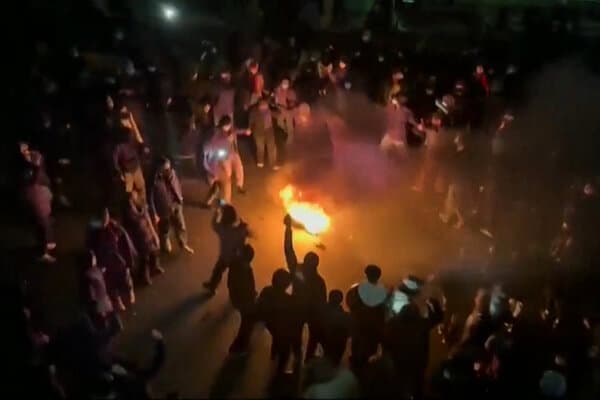
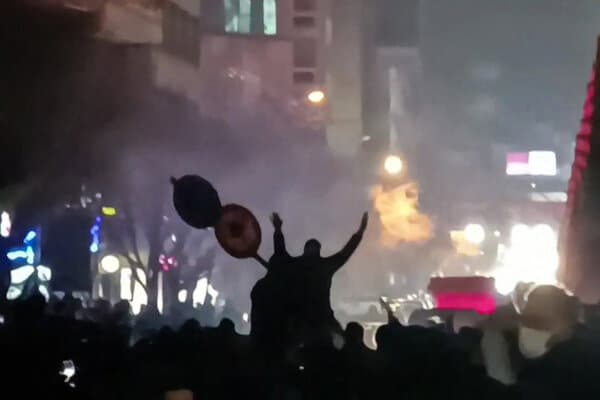
Former President Donald Trump has asserted that Cuba is on the verge of collapse, marking the latest in a series of geopolitical predictions aimed at authoritarian regimes in Latin America. Speaking at a rally in Florida, Trump claimed that the Cuban government, long a symbol of communist resilience in the Western Hemisphere, is 'ready to fall' amidst deepening economic turmoil and internal dissent. This declaration follows his earlier assertions regarding the imminent downfall of neighboring Venezuela, suggesting a concerted strategy to highlight the fragility of leftist governments in the region. Trump's rhetoric echoes the Cold War-era dynamics that have historically defined U.S.-Cuba relations, revitalizing calls for stricter sanctions and increased diplomatic pressure. The Cuban economy has been battered in recent years by the combined effects of the U.S. embargo, the devastating impact of the COVID-19 pandemic on tourism, and the economic crisis in Venezuela, a former key benefactor. Shortages of food, medicine, and fuel have become commonplace, leading to rare public protests across the island. Trump utilized the platform to criticize the current administration's approach to the region, arguing that perceived weakness has allowed adversarial influences to solidify. He promised a 'very strong' policy toward Cuba if returned to office, hinting at a reversal of the limited opening seen under the Obama administration. Analysts suggest that while the situation in Cuba is indeed precarious, predicting an immediate collapse may be an exaggeration for political effect. The Cuban regime has proven historically durable, maintaining tight control over security and media despite economic hardship. However, the statement serves to energize the influential Cuban-American voter base in swing states like Florida. Meanwhile, the Biden administration has recently taken steps to ease some restrictions on remittances and travel, attempting to support the Cuban people without legitimizing the government. Trump's comments complicate this diplomatic balancing act, putting the spotlight back on the hardline stance favored by many exile groups. As regional instability grows, the question remains whether external pressure will hasten change or fortify the regime's resolve. The comments also highlight the enduring legacy of the 1962 embargo and the broader ideological battle playing out across the Americas. For the Cuban government, Trump's words are likely to be dismissed as interference, used as a rallying cry for national unity against a foreign threat. For the Cuban people, however, such high-level rhetoric raises hopes of potential change while also instilling fear of further economic isolation. The intersection of domestic U.S. politics and foreign policy continues to shape the fate of millions in the Caribbean, with the shadow of the past looming large over future prospects. Economic indicators show that despite the regime's difficulties, there is no immediate sign of the total structural collapse suggested by the former president. Nevertheless, the narrative of an 'imminent fall' persists, fueled by exile communities and political actors seeking a hardline pivot in U.S. foreign policy. The situation remains volatile, with the potential for sudden shifts depending on both internal pressure and the external geopolitical climate. The debate over the effectiveness of isolation versus engagement remains central to the discussion, with Trump clearly advocating for the former. His assertion serves as a sharp contrast to the diplomatic efforts of recent years, signaling a potential return to confrontation should he regain power. The stability of the Caribbean depends heavily on the trajectory of the Cuban state, making this rhetoric significant for regional security as well as humanitarian concerns.