NASA to Return I.S.S. Astronauts Home Early Following Medical Issue
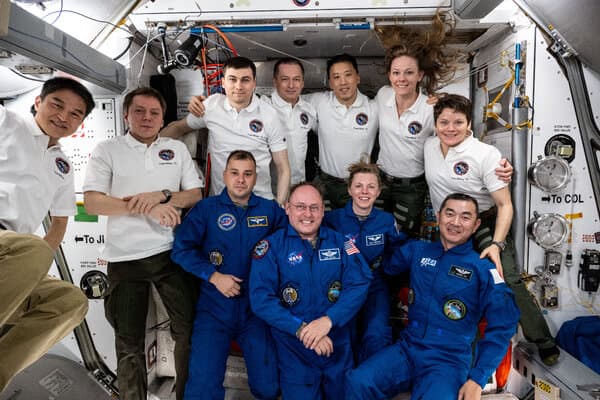
NASA has announced plans to return astronauts from the International Space Station (I.S.S.) earlier than scheduled due to an undisclosed medical issue. The decision was made after careful evaluation of the crew's health and safety, prioritizing their well-being above the standard mission timeline. The medical issue, which remains confidential to protect patient privacy, was identified during routine health monitoring protocols. NASA officials, in consultation with international partners, determined that an expedited return is the most prudent course of action. The agency emphasized that the situation is manageable onboard the I.S.S. but requires terrestrial medical facilities for a full resolution. The affected astronaut, whose identity has not been released, is reported to be stable and responsive. The crew has been provided with necessary medical supplies and support from ground control. The I.S.S. continues to operate normally, with the remaining crew members attending to essential maintenance and scientific experiments. The early return involves a complex logistical adjustment. The standard return schedule is tightly integrated with launch and landing windows for various spacecraft, including SpaceX’s Crew Dragon and Boeing’s Starliner. NASA is coordinating with its partners to secure a return capsule and adjust the undocking and deorbit burn timelines. This will likely result in a shorter stay for the returning astronauts and a potentially reduced crew size on the station for a brief period until a replacement crew can be sent. This incident highlights the inherent risks of human spaceflight. Long-duration missions in microgravity environments pose numerous health challenges, including bone density loss, muscle atrophy, and fluid shifts that can affect vision and cardiovascular function. While NASA has extensive medical protocols in place, unexpected health events can and do occur. The agency’s ability to adapt quickly and safely is a testament to its robust operational readiness. The I.S.S. has a long history of managing medical incidents in orbit. In the past, crews have dealt with dental emergencies, minor injuries, and even a potential kidney stone. The station is equipped with advanced medical hardware, including ultrasound equipment and a supply of prescription medications. Astronauts receive extensive medical training, including how to administer first aid and perform minor procedures. However, for conditions that require more advanced diagnostics or treatment, evacuation to Earth is the only option. This event may reignite discussions about the need for more sophisticated medical capabilities on the I.S.S. and future deep-space outposts. As NASA looks toward missions to the Moon and Mars, the communication delay and vast distance will make immediate evacuation impossible. Developing autonomous medical care and advanced diagnostic tools is a critical priority for the agency. The early return does not signal a failure of the mission. Scientific research on the I.S.S. is robust and continuous, and while the early departure of one astronaut will shift workloads, the core objectives of the current expedition are expected to be largely met. The remaining crew will continue their duties, focusing on high-priority experiments that require human observation and operation. NASA will hold a press conference in the coming days to provide further updates on the timeline for the return and the general health of the crew. The agency has assured the public that the astronaut’s privacy is paramount and will not be releasing specific details about the medical condition. The focus remains on a safe and timely return to Earth for the affected individual. The cooperation between NASA and its international partners, including Roscosmos, the European Space Agency, and others, is crucial in these situations. The I.S.S. is a model of global collaboration, and the ability to coordinate response efforts across different agencies and nations is a key factor in the station’s success and safety record. The partners will work together to ensure that the station remains fully staffed and operational throughout the transition. Ultimately, this situation serves as a powerful reminder of the fragility of human life in the harsh environment of space. It underscores the importance of rigorous medical screening, continuous health monitoring, and the flexibility to respond to unforeseen circumstances. The crew of the I.S.S., both on the ground and in orbit, demonstrated exceptional professionalism and teamwork in addressing this issue. The safe return of the astronaut is the top priority, and the global space community watches with support and confidence in NASA’s ability to manage the situation effectively.