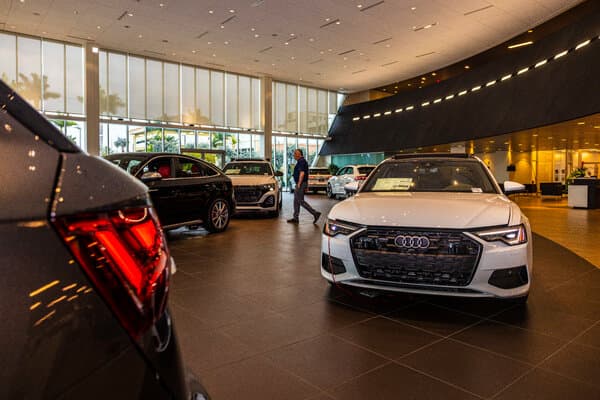
Luxury Buyers Drive Surge in New Car Sales, Bucking Economic Trends
New car sales in the United States are experiencing an unexpected resurgence, driven primarily by wealthy consumers who are largely insulated from broader economic headwinds. While inflation and high interest rates have squeezed the budgets of middle and lower-income households, the affluent segment of the population continues to spend freely on vehicles. This trend is reshaping the automotive industry's sales strategy and product mix, with manufacturers shifting focus toward premium models and luxury features to capture this resilient demand. Industry analysts point to several factors fueling this boom among high-earners. Robust stock market performance, rising real estate values, and strong employment in high-paying sectors have bolstered the financial positions of wealthy households. Unlike the average consumer, these buyers are less sensitive to financing costs, often paying in cash or securing favorable loan terms despite the Federal Reserve's rate hikes. As a result, dealerships are reporting record-breaking sales of vehicles priced above $60,000, while more affordable models sit on lots longer. The data reveals a stark divergence in the auto market. Sales of entry-level cars and economy SUVs have declined significantly, reflecting the financial pressure on typical families. However, sales of luxury brands like BMW, Mercedes-Benz, and Audi, along with high-end trim packages on domestic trucks and SUVs, have soared. Automakers are responding by discontinuing cheaper trims and introducing more expensive special editions. This pivot to luxury is not without risk; industry observers warn that an economic downturn could eventually dampen even the wealthiest consumers' enthusiasm for big-ticket purchases. Dealership experiences vary widely by region. In affluent metropolitan areas, inventory is tight and demand is high, often leading to prices above MSRP for sought-after models. In contrast, lots in economically depressed regions are offering substantial discounts to move inventory. Salespeople report that well-off buyers are prioritizing technology, comfort, and status symbols, frequently opting for add-ons that push the final price even higher. The average transaction price for a new vehicle has climbed to an all-time high, largely driven by this premiumization trend. Electric vehicles (EVs) are also a significant component of this sales surge, particularly among wealthy early adopters. Despite concerns about charging infrastructure and battery range, high-end EVs from Tesla, Rivian, and legacy automakers are selling rapidly. Government incentives for EVs have provided an additional, though minor, boost. However, the bulk of the sales growth is attributable to conventional internal combustion engine vehicles, specifically large luxury SUVs and performance cars that cater to the tastes of high-income buyers. Looking ahead, the automotive sector faces a bifurcated future. As long as wealth inequality persists and financial markets remain strong, luxury auto sales should remain robust. However, the industry is keenly aware that this momentum cannot last forever. Automakers are attempting to balance their current focus on high-margin luxury vehicles with the long-term need for affordable transportation for the masses. For now, the road is paved with premium leather and high-gloss trim, catering to those who can afford the ride.