Inside Myanmar's Gilded Capital: Empty Streets and Moldy Corners
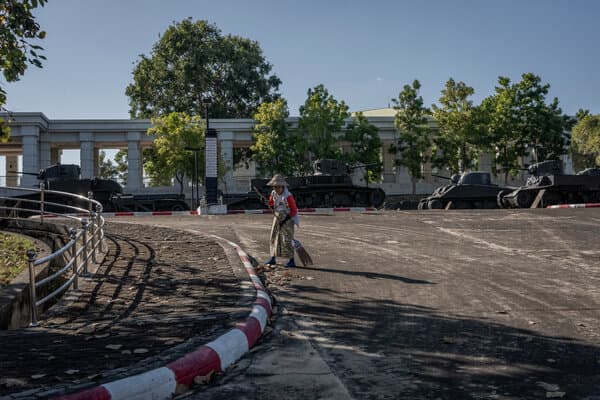
Naypyidaw, the sprawling capital of Myanmar, presents a stark contrast to the chaos engulfing the rest of the country. Constructed from scratch by the former military junta and inaugurated in 2005, this city of vast boulevards and monumental government buildings remains an enigma. Today, beneath the veneer of imperial grandeur, the capital is witnessing a slow decay, mirroring the isolation and paralysis of the ruling junta following the 2021 coup. The coup, which ousted the democratically elected government, initially triggered widespread protests and a fierce armed resistance. While the military retains control over major urban centers, the regime is struggling to suppress a burgeoning civil war that has engulfed the countryside. However, in the sealed-off corridors of Naypyidaw, the gravity of the crisis often seems muted, replaced by an eerie silence. The atmosphere within the capital is palpable. Driving down the 20-lane Highway No. 3, one often finds themselves entirely alone. The city, designed to house millions, feels ghostly. During the height of the pandemic, the regime enforced a strict lockdown, sealing off the capital from the rest of the nation. Although restrictions have eased, the psychological and physical isolation remains. The leadership, including Senior General Min Aung Hlaing, appears increasingly detached. They inhabit their own bubble, surrounded by palatial residences and manicured lawns. The junta organizes elaborate events in the city, such as Christmas celebrations and flower festivals, intended to project a sense of normalcy and control. Yet, these displays feel hollow, akin to theater performed on an empty stage. The international community has largely shunned the regime. Western diplomats, who once maintained a presence in this administrative hub, have mostly left. Foreign embassies are situated in Yangon, the former capital, and diplomatic travel to Naypyidaw is rare. This diplomatic vacuum adds to the city's feeling of abandonment. Even domestic travel to Naypyidaw is difficult. The military strictly controls entry, searching vehicles and scrutinizing travelers at checkpoints. This is partly due to fear of insurgent attacks. Guerrilla fighters have managed to strike targets even within the capital's periphery, such as a bombing at a luxury hotel, proving that the city is not as secure as the generals claim. Internally, the regime is rotting. While the upper echelons enjoy luxury—fine wine, golf, and lavish banquets—the lower rungs of the bureaucracy suffer. Salaries are pitifully low due to hyperinflation, and the state machinery is failing. Basic services are crumbling; the sidewalks in front of government ministries are cracking, and utility workers scramble to fix intermittent power and water supplies. There are reports of mold growing in the walls of dilapidated government dormitories. General Min Aung Hlaing has been compared to a modern-day King Midas in reverse; his touch seems to turn everything to ruin. His obsession with legacy has led to the construction of extravagant museums and monuments while the population faces starvation. The economy is in freefall, and the military is losing territory across the nation. Despite the grim reality, the junta continues to shell out funds for vanity projects. A new metro system is being touted, though it stands largely empty. The regime is desperate to maintain the illusion that the city—and the country—is functioning under their steady hand. They have scheduled elections for later in the year, widely viewed by the international community and resistance groups as a sham designed to legitimize their rule. Inside the capital, life for the ordinary civil servant is one of fear and paranoia. The regime has arrested thousands of civil servants who joined the Civil Disobedience Movement (CDM), which seeks to paralyze the administration. Those who remain in their posts live under constant surveillance, worried that neighbors or colleagues might inform on them. The city's layout itself reflects the regime's paranoia. The vast distances between residential zones and government offices are designed to prevent the gathering of crowds. The lack of public transportation ensures that only those with approval and private vehicles can navigate the city, effectively keeping the populace atomized. The capital was built to be a fortress, a place from which the generals could rule unimpeded by the populace. Built with Chinese and North Korean labor, it was intended to be impervious to the whims of the people. Yet, the very isolation that was meant to protect the regime is now exacerbating its disconnect from reality. Reports from inside suggest a regime at war with itself. Factions vie for power, and there is growing dissatisfaction among mid-level officers who are being sent to the front lines to die in a war that seems unwinnable. The heavy casualties suffered by the military are being hushed up, but the funerals of soldiers are becoming a common sight even in the capital. As the resistance forces, a coalition of ethnic armies and pro-democracy militias, inch closer to Naypyidaw, the anxiety in the city grows. The generals know that their grip on the capital is the last thread holding their power together. If Naypyidaw falls, the regime falls. Currently, the city remains a gilded cage, a place of opulence built on a foundation of suffering. The empty streets are a testament to a failed state, and the moldy corners of government buildings are the physical manifestation of a decaying regime. While the junta attempts to paint a picture of stability, the reality is a capital holding its breath, waiting for the inevitable end.