Ancient Moroccan Fossils Suggest New Missing Link in Human Evolution
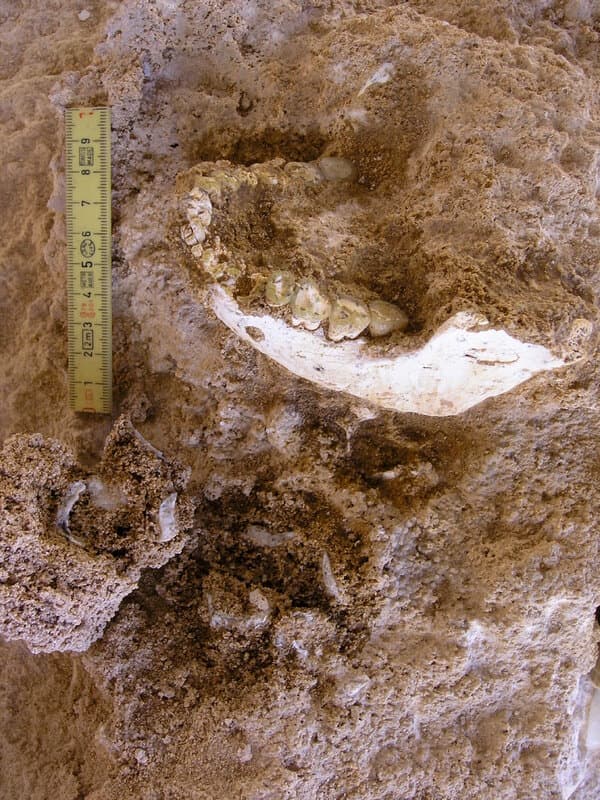
A groundbreaking discovery in a Moroccan cave has ignited fresh debate and excitement within the scientific community regarding the complex lineage of human evolution. Researchers have unearthed a trove of fossilized remains that they believe could represent a pivotal transitional phase, often referred to as a 'missing link,' between early hominids and modern humans. The findings, drawn from the depths of the Jebel Irhoud cave system, challenge long-held assumptions about the timeline and geographical spread of our ancestors. The excavation team, comprised of international paleoanthropologists, spent years meticulously extracting and analyzing skeletal fragments and primitive tools buried deep within the limestone caverns. Radiometric dating of the surrounding geological layers places these fossils at approximately 300,000 years old, a date that significantly predates many previously identified specimens of early Homo sapiens. This chronological positioning suggests that the lineage leading to modern humans may have diverged and developed in North Africa much earlier than previously thought, rather than exclusively in East or South Africa. The morphological characteristics of the fossils display a fascinating mosaic of features. While the cranial structure exhibits the heavy brow ridges and sloping forehead characteristic of archaic humans, the overall shape and dental structure show clear affinities with more modern forms. This blend of primitive and derived traits is exactly what evolutionary biologists look for when searching for direct ancestors. It bridges the gap between Homo heidelbergensis, an ancestor to both Neanderthals and modern humans, and the later emergence of fully anatomically modern humans. In addition to the skeletal remains, the discovery of stone tools associated with the fossils provides crucial context regarding the cognitive capabilities of these ancient people. The tools, primarily flint flakes and cores, demonstrate a level of craftsmanship indicative of the Acheulean technological tradition. However, the presence of finer, more specialized implements suggests a sophistication that rivals the Middle Stone Age tools found at much younger sites. This implies that the cognitive leap necessary for complex symbolic thought and advanced tool-making was already underway during this earlier period. The implications of these findings extend beyond mere anatomy. They force a re-evaluation of the 'Out of Africa' theory, which posits a rapid dispersal of modern humans from a single point of origin. The Moroccan evidence hints at a more complex picture, perhaps involving multiple waves of migration and intermingling across the African continent. The diversity in human form during this era appears greater than the fossil record has previously revealed, painting a picture of evolution as a braided stream rather than a straight line. Critics of the study urge caution, noting that the definition of a 'species' in paleontology is often fluid and subject to interpretation. They argue that while the fossils are undoubtedly significant, they may represent a regional variant of an existing species rather than a direct ancestor to all living humans. Further analysis of the DNA, if preservation conditions allow, will be necessary to definitively settle this debate. However, the weight of the anatomical evidence currently leans heavily toward the researchers' claims of a foundational link. The location of the discovery itself is noteworthy. Finding such ancient hominid remains in North Africa expands the known range of early human occupation. It suggests that our ancestors were adaptable and capable of thriving in diverse environments, from the savannas of East Africa to the cave systems of the Maghreb. This adaptability is likely a key factor that eventually allowed them to spread out of Africa and populate the entire globe. As the scientific community digests these results, further excavations are already being planned in the region. The researchers hope to uncover more remains to get a clearer picture of the population dynamics at play 300,000 years ago. Each new fragment adds a piece to the puzzle of what makes us human, revealing that our history is far more intricate and diverse than we ever imagined. The Moroccan cave fossils serve as a humbling reminder that the roots of humanity run deep, and that the search for our origins is far from over.