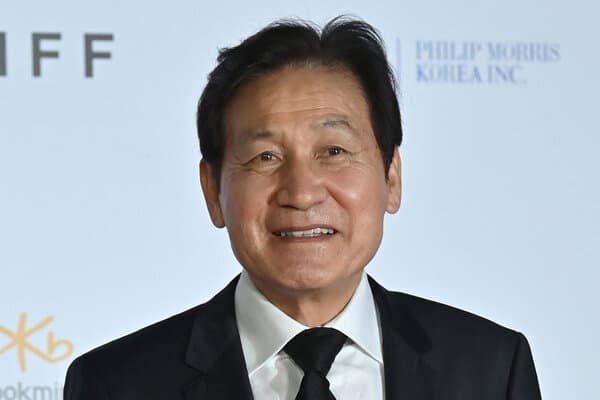
Ahn Sung Ki, Legendary South Korean Actor, Passes Away at 74
The South Korean film industry and its global audience have lost one of their most distinguished figures. Ahn Sung Ki, a revered actor whose career spanned over five decades and more than 150 films, has died at the age of 74. His passing marks the end of an era for Korean cinema, silencing a talent that helped bridge the gap between local storytelling and international recognition. Born in 1952 in Daegu, Ahn was destined for the spotlight. The son of legendary film director Ahn Seok-yeong, he began his acting journey as a child star, debuting in the 1966 film "The Rainbow Over the Reservoir." This early start earned him the moniker "The Nation's Little Brother," a title that reflected the deep affection the South Korean public held for him throughout his life. However, it was Ahn's transition to adult roles that cemented his legacy. During the 1970s and 80s, he became a dominant force in the Korean film industry, which was then grappling with strict government censorship. Ahn became the face of the melodramatic genre, capable of conveying profound emotional depth that resonated with audiences navigating a tumultuous period in the nation's history. His performances were not merely acting; they were vessels for the collective sorrow and hope of the Korean people. As the political landscape shifted and the era of military rule gave way to democracy in the late 1980s, Ahn’s career evolved alongside his country. He shed the image of the innocent youth to embrace more complex, gritty, and morally ambiguous characters. This versatility allowed him to remain a relevant and vital presence in the industry even as a new generation of stars emerged. His international breakthrough came in the late 1990s and early 2000s, coinciding with the rise of the "Korean Wave" (Hallyu). Ahn was a key player in this cultural export, starring in some of the most significant films of the movement. His role in "Shiri" (1999), a high-octane action thriller, was pivotal in proving that South Korean films could compete with Hollywood blockbusters in terms of production value and suspense. Perhaps his most critically acclaimed performance came in Im Kwon-taek’s "Chunhyang" (2000), a traditional pansori opera adaptation that premiered at the Cannes Film Festival. His portrayal showcased the richness of Korean traditional arts to a global audience. He further solidified his status as an international star with "Mystic River" (2004), a Hollywood production where he held his own alongside Sean Penn and Tim Robbins, a rare feat for a Korean actor at the time. Ahn was also instrumental in the groundbreaking film "The Host" (2006) by Bong Joon-ho. Playing the patriarch of a family fighting a monster, Ahn demonstrated his ability to blend genres, moving seamlessly between pathos and dark comedy. Beyond his filmography, Ahn Sung Ki was a cultural ambassador and a pillar of the artistic community. In 2002, he received the Eungwan Order of Cultural Merit, the highest cultural honor in South Korea. He served as the president of the Korean Film Actors Guild and later as the chairman of the Busan International Film Festival organizing committee, working tirelessly to support and elevate the industry he loved. In recent years, Ahn had stepped back from the limelight due to health complications, specifically related to a brain tumor and subsequent strokes that he had battled since 2015. Despite these challenges, his spirit remained unbroken, and he was remembered fondly by colleagues for his dedication and kindness. News of his death has sent shockwaves through the entertainment world. Tributes have poured in from actors, directors, and fans alike, all mourning the loss of a true cinematic master. His body was laid to rest at Seoul National Cemetery, where he was given a funeral befitting a national icon. Ahn Sung Ki leaves behind a body of work that will continue to educate and entertain future generations, ensuring that the "Nation's Actor" will never truly be forgotten.